The problems this exists to solve.
Built for enterprise AI.
How it works for your team, day to day.
Stop privileged files at the upload
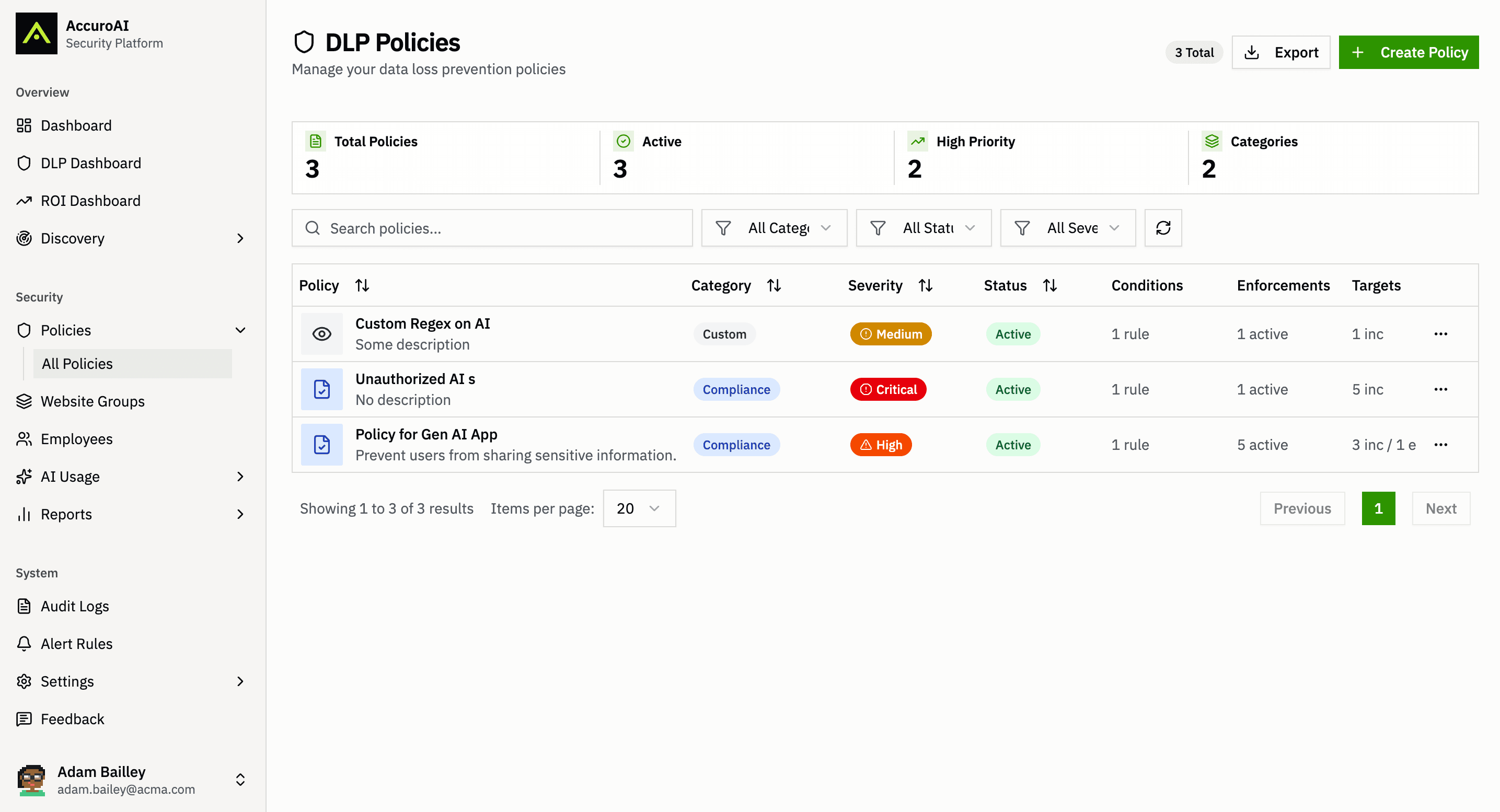
Uploads of .docx, .xlsx and .pdf files and of .jpeg and .png images that contain sensitive data are blocked on their way to public or personal AI. Uploads to the licensed tool signed in with the firm identity are allowed, so the firm decides where privileged material can go.
Redact client data without slowing drafting
Client identifiers such as SSNs, account numbers and email addresses are redacted inline in real time, before the prompt is sent. The AI answers on the cleaned text, so a paralegal can still summarize a settlement file without the numbers leaving the firm.
Show clients that AI use is controlled
A live AI inventory, email alerts to named administrators on every violation, and audit logs at administrator and employee level give the firm a record to share in client audits. Conversations are captured only when a policy is violated, so routine client work is not stored.
The questions we hear most.
Does AccuroAI satisfy our duties under Model Rule 1.6?
No tool can do that for a lawyer. The duty to protect client confidences rests with the firm and its lawyers. AccuroAI keeps client data out of AI tools you have not approved, redacts it where AI is allowed, and keeps a record of the steps the firm took.
Will it store our privileged conversations?
No. Discovery records which AI tools are in use, by which account and on which plan. Conversation content is captured only when it violates a policy, such as a blocked upload or a pasted SSN.
Can lawyers keep using the firm's licensed AI?
Yes. Policies distinguish the account as well as the app, so uploads to the licensed tool signed in with the firm identity go through, while uploads to public or personal AI accounts are stopped.
Does this integrate with our DMS?
No integration is needed. Enforcement runs on the device, through a browser extension for Chrome and Edge and the AccuroAI Desktop App, so it governs what goes to AI tools whichever DMS you run. There is no TLS interception and no proxy.
How can we try it?
Deploy through the MDM you already run, or without MDM for a pilot. A 72-hour pilot maps the AI already in use across the firm before any policy is enforced.