The problems this team brings to us.
Built for enterprise AI.
How it works for your team, day to day.
Secrets stopped before the prompt sends
More than 60 secret types (API keys, tokens, certificates, connection strings) are detected and blocked inline across IDEs, CLIs, and browser sessions at sub-38ms. The engineer sees why it was stopped and keeps working; the key never leaves the machine.
Source stays yours
Proprietary-code classifiers distinguish your codebase from boilerplate, so pasting a generic stack trace works while pasting the pricing engine doesn't. License-risk flags mark AI suggestions that resemble copyleft-licensed code before they land in your repository.
Guardrails your pipeline understands
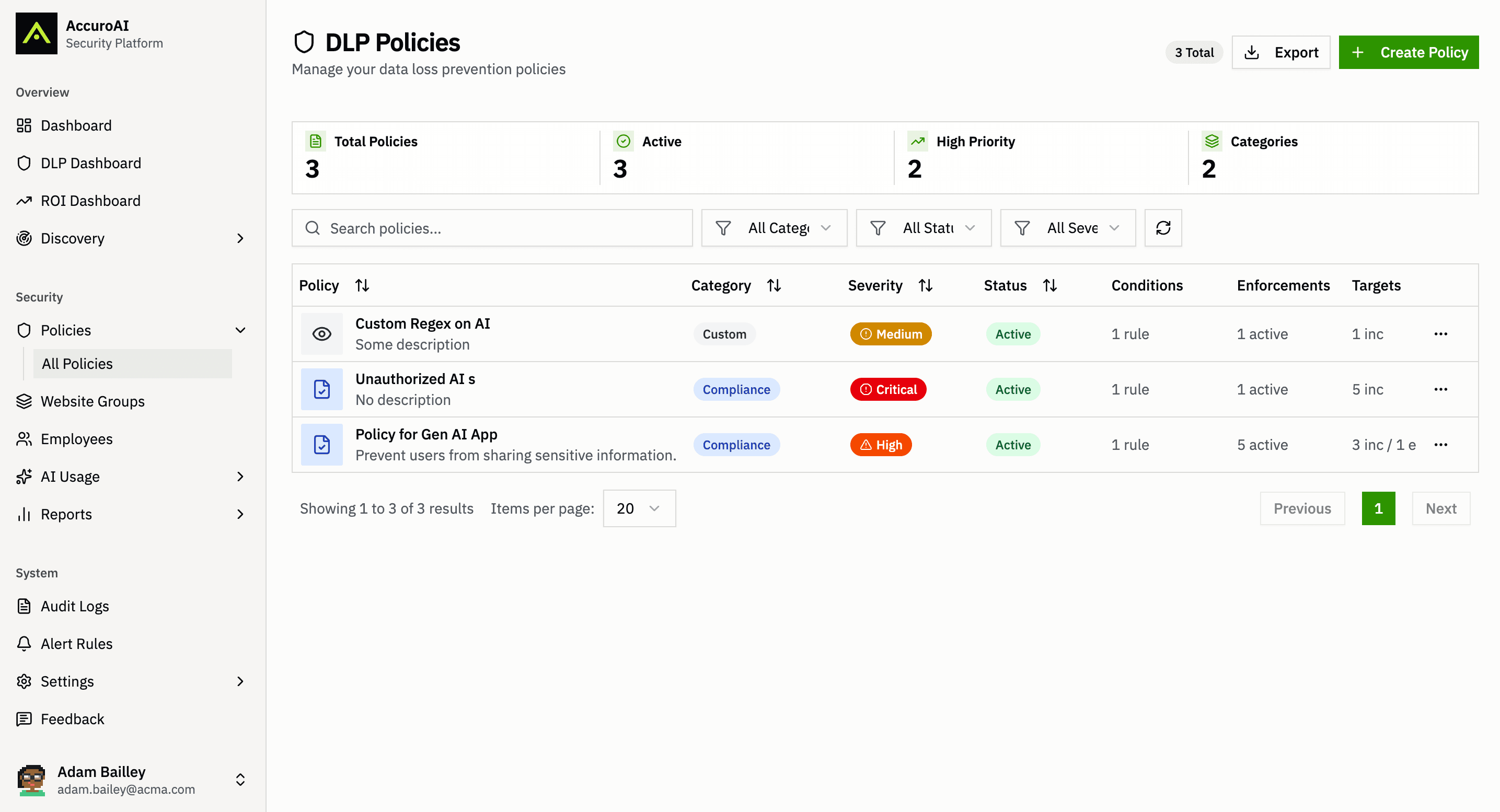
Policies are code: versioned, reviewed, and staged like any other config. The SDK drops into internal agents and CI steps as middleware, so the same rules that govern a developer's IDE govern the automation that ships on Friday night.
The questions this team asks first.
Which coding tools are covered?
GitHub Copilot, Cursor, Claude Code, Codeium, and browser-based assistants: coverage is at the surface level (IDE, CLI, browser), so new tools are governed the day they appear.
What about false positives on secrets?
Detection combines format, entropy, and context, and every block shows its reason. Teams can add custom patterns for internal token formats and allowlist test fixtures.
Does inspection slow the editor?
No. Evaluation is sub-38ms p99, well under typist perception, and runs on the prompt boundary rather than on every keystroke.
Can we write custom detection for our own formats?
Yes. Regex and keyword classifiers for internal schemas, project names, and token formats deploy through the same policy pipeline.